What’s In a Name? What’s In The Bottle?

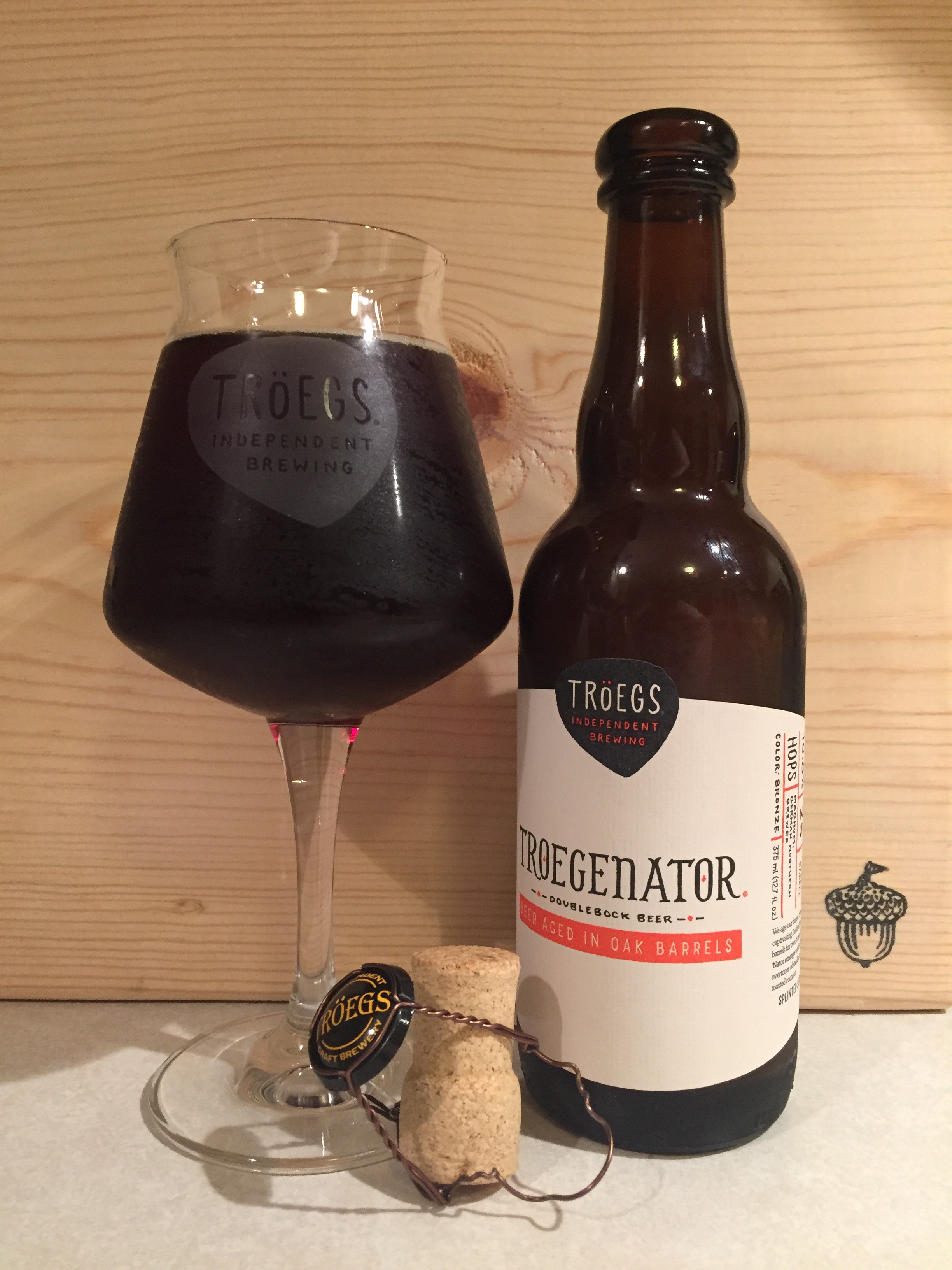
 Troegenator Doublebock Beer Aged in Oak Barrels

There is a lot to unpack here… both inside and outside of the bottle

First the outside: The name of the company on the label, and on the cage don’t exactly match; never mind the actual logo.  Back in November Tröegs unveiled their new branding along with a new name.  What had previously been Tröegs Independent Craft Brewery is now Tröegs  Independent Brewing. I am sure future cork and caged beers will have a unified logo but right now its interesting to consider the two names and logos side-by-side.

In light of the slightly new moniker, the old one was a bit messy and too long.  The new name, Tröegs Independent Brewing, on the other hand is only three words and feels cogent in comparison.

The interesting part to me is the deletion of the word “craft.”  I see this as forward thinking.  With the craft beer industry maturing, what constitutes “craft” is becoming increasingly difficult to define. So much so that “craft” might now be meaningless beyond a somewhat arbitrary line regarding the number of barrels a brewery produces each year.

Contrastingly, “independent” is of growing importance and is both easily understood and defined. Brewers all over are either selling off to the “macros,” buying each other, merging or entering into loose confederations to stave off buyouts. In my opinion, the Trogner bothers appear to be making a statement about their company in emphasizing “independence” over “craft.” I really like and support this message.

The name of this specific beer is worth thinking about as well.  While it is wholly accurate to state that the Troegenator in this bottle is aged in oak barrels, it fails tell the whole story.  These were bourbon oak barrels. This caused a little bit of confusion during the announcement of this beer but it was easily cleared up on social media.

This ale has an obvious yet subtle bourbon element right from the moment you open her up.  Unlike some recent bourbon barrel aged beers I have enjoyed, this one is mellow right from the start and does not overpower your senses with boozy, hot, astringency. Instead, the bourbon follows the beer’s lead.  Troegenator is leading this dance and the bourbon is swept along; allowing the ale to show off.

That being said, the flavor is undeniably bourbon barreled with vanilla, some light coconut, and a sweet toasted/roasted maltiness.  Mouth feel is rich and full with very tiny bubbles that are slightly prickly on the tongue.  Dark fruit, nutty wood, and molasses notes come forward as the beer warms up along with a slight earthy tone.  Nose is sweet with a wood and charred edge from the bourbon barrels. The clear, deep red toned ale provides a very long and lasting finish.  That makes this a sipper despite no alcohol burn from the 10.8% ABV; it is stunningly smooth for a double digit beer.

This beer tastes like it is at peak performance right now but hints that it is prepared to age with the best of them.  Some bourbon barrel aged beers come out of the gate with a hot edge that needs years of rest to mellow out, thereby reaching full enjoyment only after cellaring.  This one is ready now and yet will continue to mature for years.

Post Script: Liz Murphy over at Naptownpint.com back in November wondered about the name change and thought there was little in the way of discussion about it.  I think the reasons for the name change, specifically “Independent” winning over “Craft,” are obvious and stated above. But in the end, my thoughts are simply speculation.

I wonder if the decision to not use the term bourbon on the label points to future iteration of a Splinter Troegenator but coming from the still under construction Splinter Cellar; not necessarily bourbon barrels.

It should be noted that last February’s release of Bourbon Barrel-Aged Troegenator (750 ml bottles) did not have the word bourbon on the front of the label either. I still have two bottles of this tucked away and might open one soon.

I’m sure there is some crazy Federal regulation against it but it would be cool if it was named Bourbon-nator. (Credit to Tierney for that one.)

Doing a Beer Exchange the Right Way

Recently, I was invited by my friend Dave to attend his beer exchange/blind tasting.  I eagerly accepted the invite without necessarily understanding what I was getting myself into.  What I was participating in was the sixteenth iteration of what is easily the most impressive beer exchange I have ever joined.

Couple things about Dave: 1. He knows his beer and has an impressive nose for quality. 2. He is a huge Tom Brady fan and is hysterically obnoxious about it. 3. As obnoxious as he is about Tom Brady, he is even more committed to throwing a great beer exchange.

I have done a number of beer exchanges over the years.  All were pretty basic: a number of guys easily divisible into 24 each buy a case of beer and everyone swaps.  It’s a fun and easy way to get a bunch of different beers. Only a few years ago before the ubiquity of mix-a-six and high end bottle shops, it was the only way to get a bunch of different craft beers in what was then case only beer distribution in backwards Pennsylvania.

This specific beer exchange was different. Guys were bringing big beers, and there was incentive to impress.  Everyone starts with bringing a case of beer, expectation is that you are bringing a beer of acceptable pedigree and quality and it can’t be something that has been brought to the party before (there is a running list on Google docs). So no Sierra Nevada Pale Ale or Dogfish Head 60 Minute IPA, great beers but… Been there. Drank that.

The way it works is each of the twelve participant brings one case and deposits ten bucks into the pool. Each case has two beers brought to the collective and each is part of a blind tasting. The beers are listed on a scoring sheet and as you taste each you make notes and after you all beers are done you attempt to match them up, giving you best guess as to which beers you tried from the provided list. You also do a ranking, listing your top three beers from the twelve.

The $120 gathered by the group provides two “awards” one is for the most beers correctly identified (harder than you might think even with some obvious ones) wins a $60 bottle of beer. The other $60 was for some general gambling purposes.

The lineup for this year’s Blind Tasting Beer Exchange was as follows:

Daisy Cutter by Half Acre

Fruitbasket by Champion Brewing Company (The Highest Rated Beer)

Hotbox Coffee Porter by Oskar Blues Brewery

Manor Hill IPA by Manor Hill Brewing

CLINK! by SØLE Artisan Ales

Allie’s Donuts Double Chocolate Porter by Narragansett Brewing Company (My contribution)

Watermelon Dorado by Ballast Point Brewing & Spirits

Pineapple Sculpin by Ballast Point Brewing & Spirits

Tropical Bitch by Flying Dog Brewery

Big Daddy IPA by Speakeasy Ales & Lagers

Oak Barrel Stout by Dominion Brewing Company

Duet by Alpine Beer Company

All the beers were well received but for the Big Daddy IPA. The Big Daddy was a year old and the time sitting on the beer distributor’s shelf imparted a wet cardboard, Saint Bernard breath finish that was widely mocked. Always check the dates on your beers people… especially those hoppy beers.

The quality of the beer selection was top notch. The beers were all very good (well except for Big Daddy) and everyone appeared equally impressed. The one part of the night that might be most critical to control, and this is totally to Dave’s credit, is the quality of the company. We had a dozen guys each with an impressive knowledge of craft beers and none of them were dicks about it. It is becoming increasingly difficult to find craft beer people that appreciate the craft and the beer. More than once that night I heard “It’s just beer.”  That is right… it is “just beer” and this was an incredibly fun way to enjoy and celebrate “just beer.”

The lasting privilege was each participant left the exchange with two of every beer sipped that night; even the year old Big Daddy.

Post Script: My favorite beer from the evening was Tropical Bitch by Flying Dog.  It’s an impressive brew.

Some guys brought a couple whales to share before starting the blind tasting.  I had Trickery by Hardywood Park Craft Brewery, and Xibalba by Wicked Weed; both great beers. 

Lacto Calrissian Sour Double IPA by Pizza Boy Brewing was the best thing I had all night and might be my favorite beer in a long, long time; yeah it was that good. The taste is even better than the name.

I brought a growler of OH Mad Hops, an unfiltered Imperial IPA by Mad Chef in East Petersburg; it was well received. I was very impressed with the quality of their beer after only six months of brewing.  Mad Chef is a brewery to watch.

Tom Brady and the Patriots are dirty rotten cheats and everyone knows it.  F those guys.

Special Thanks to Dave for inviting me to this Beer Exchange. He was a phenomenal host and did a great job.  Its just goes to show that you can root for Tom Brady and still be a decent person… Who knew?

#DrinkItNow

The ladies over at the newly redesigned Stouts and Stilettos are promoting an idea dreamed up out of Portland, Maine by Allagash Brewing that is as brilliant as it is simple:  #DrinkItNow

The point is to stop waiting for the perfect opportunity to drink that beer you have squirreled away. NOW is the time to drink it.

I have a beer cellar of which I am very proud. It is not the greatest collection of beers collecting dust by any stretch of the imagination but I love them. Many of these beers at this point sometimes feel almost too precious to drink on just a lazy Sunday afternoon. But that is wrong.

What a better time than now to crack one open as we fight off the doldrums of winter. It is time to celebrate that old beer for no reason other than its great to drink delicious, aged, big beers.

What am I drinking this Sunday?  I don’t exactly know yet.  That is why I am putting it to a vote.  Which of the following beers should I break out for the February 21st #DrinkItNow day?

The three choices:

2013 Old Ruffian Barleywine by Great Divide Brewing Co.

2012 Olde School Barleywine by Dogfish Head

2011 Dark Intrigue (BBA) by Victory Brewing Company

Vote between now and noon of February 21st and the winning beer will be cracked open that evening. Please click on the link immediately below and vote.

What Should Bearcat Drink For #DrinkItNow?

Cheers!

Nugget Nectar: My Little Red Ale

Harvey Penick's Little Red Book

Harvey Penick a golf pro from Austin, Texas lived to the age of 98.  Fifty of those years were spent teaching the game of golf. Over the years he accumulated his wealth of knowledge into what he called his “Little Red Book.”  In 1992, Harvey Penick’s Little Red Book: Lessons And Teachings From A Lifetime In Golf was published and became the greatest book ever published on the game of golf. This is not up for debate.

Beyond just it’s obvious lesson on golf Penick’s book of advice, rules, anecdotes, observations, and quips has broader applications.

One of the lessons centers on knowing and trusting one club. The basic premise is you need to have one club, that you know and can hit correctly every time. You know the length, the movement of the ball and the shape of the shot perfectly. This one club has all your trust.

For me, back before kids truly killed a game nearly countless surgeries couldn’t, my trusted club was my 7 iron.  Time and again I would go to the range and spend an entire bucket of balls on my 7 iron. I loved the club.  I hit it endlessly. When I was having a bad round (many of them) I always knew I could rely on that club.  If I needed to lay up, dig out of some rough, or just get some confidence back, my 7 iron was there for me.

I loved this club so much that when I happened upon an old, used but matching one within a stack of abandoned clubs for sale I bought it.  I own two; just in case.

It is great advice and I have on occasion applied it to other parts of my life; in cooking, work, music appreciation, and movies.  I have one “thing” that is my go to, that I know better than any other.

NN

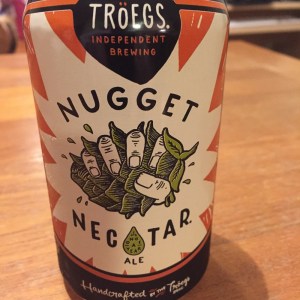
When it comes to beer, my “go to” is the once-a-year Nugget Nectar by Tröegs Independent Brewing.  Nugget Nectar is my 7 iron. There is no beer I know better. I have been drinking it every January and February for years.  When Troegs releases its much beloved imperial amber ale, I scoop up as much of it as I can. Other beers fall to the side and I focus on Nugget Nectar.

I know Nugget Nectar through and through. The piney, citrusy, resinous flavors with a strong but subtle malty backbone help me define what I like about craft beer.  It’s a steady post from which I can pin my taste, feelings, and thoughts about other beers. The juicy fruitiness, the bittering hops and the long lasting finish just work for my palate. When Nugget Nectar comes out, I buy a couple cases and drink it consistently until it’s gone. I hunt it down on draft when I visit the local bars and I drink both the cans and bottles. While I rarely drink the same beer twice in a row, I focus on this one beer for six to eight weeks each year.

Craft beer drinkers have a tendency to always be seeking out what is new or what is different; and that is great. I love trying new beers. Hunting down the newest release and finding new exciting offerings is part of the fun.  Who doesn’t love building a mix-six of new, untried brews? But when was the last time you bought a case and drank them all without mixing it up, allowing you really focused on that one beer and learned it front to back?  Does the beer change from the day it is freshest to two months old (Hint: They do. I bought a case of Nugget Nectar canned on January 11th.  I had my first sip that day and after these weeks it’s different.) How does that change affect your interest or enjoyment of the beer?

Harvey Penick’s Little Red Book is for my pathetic golf game as Tröeg’s not so little red ale is for my beer drinking. I suggest to you that you find a beer you to can truly know… that you know better than any other beer. Go buy a case of a beer you really like and drink it over the next few weeks with little interruption by other beers, you might be surprised what it does for your taste.

2015 Was the Year of Lagers… Until It Wasn’t.

aleslagers1

I read about the coming “Lager Revolution” from no less than a dozen various outlets over the course of the prior 12 to 18 months.  Lagers were the next wave, brewers were into them, craft beer drinkers who are constantly in need of something “new” were apparently hot on them… but then… nothing.  I did not see a “wave” of lagers.

I have yet to see a shift of product lines.  Top fermenters still dominate all the major craft brewers. The exceptions being one or maybe two lagers in the year round lineup (if that), or a seasonal lager (i.e. A summer pilsner or the Marzen/Oktoberfest style beers).

So why are lagers not bursting on to the scene?  Some speculation on my part is easy:

  • They take longer to ferment. The long fermentation process, means a longer turn around. From source material to your glass takes more time. With many craft brewers running up against their capacity, what are you going to brew? Ales. They are faster. In short: Time = Money
  • Lager are tough. By their very nature, lagers tend to be more unforgiving.  Due to the longer fermentation, contaminates in the brew are given a longer time to bloom, and temperature control is fragile and lengthy.
  • There is nowhere to hide. A good quality lager will be crisp, clean, and delicate in flavor. Off notes have nowhere to hide. Ales can give brewers the benefits of fruity notes, bombed out bittering hops or high ABV by which to smooth over off flavors.  Those big flavors can make the beer more opaque and less subtle.

So unless someone would like to correct me, and please feel free to do so. I have yet to see evidence of the “Lager Revolution” and I don’t see it coming.

Brewers talk about it. Beer writers/critics write about it. Both doing so in equal measure this past week for the Thrillist (including Harrisburg’s Sara Bozich). But unless something changes, I don’t see it coming.

Ales rule the roost in the American Craft industry and will for a long time. Even in England, where lagers have dominated for seemingly time immemorial the dominance of ales have taken hold. (Really should click on the that link.)

This is not meant to put down lagers or to say they are unworthy of our hard earned beer money. Lagers are an important part of a diverse and interesting range of beers and styles for brewers and the industry.  The question: Is there support for a wave of new lagers from both brewers and customers? I don’t think so.

Cheers.

Post-Script: I like the occasional lager but I have trouble telling why I like them. When it comes to truly enjoying fine beer, it seems insufficient to simply say “it tastes good” or “I don’t like it.”  I don’t drink enough lager beers on a regular enough basis to have properly developed my taste to these beers. I plan to seek the out more in the future but, this might be part of the problem for me personally as a beer drinker when it comes to lagers.

Beer Barrel Aged Whiskey

caskmates

I received a bottle of Jameson Caskmates as a gift this past Christmas from a very good friend. When I am not drinking beer my favorite libations are either bourbon or Irish whiskey. Jameson 12 Year has been a long time favorite as a night cap or a way to address the various sports failures befallen Pittsburgh sports over the years.

Jameson Caskmates is made by sending used barrels from the Jameson distillery to Franciscan Well Brewing in Cork, Ireland.  Then Franciscan Well ages their stout in the barrels. After the beer is removed, the spent barrels are then sent back to the distillery where the Irish whiskey gets a second aging in the stout soaked casks.

This time resting in the stout used barrels darkens the color of the whiskey and really ups the body.  The additional aging also smooths out the edges giving it a more round, deeper, and more complex character. The malty, sweet, and fruity notes of the original spirit are complemented with oatmeal, coffee, nuts and roasted malts flavors. It is a remarkable whiskey.

Jameson Caskmates is for sipping neat. No ice. No water. Don’t even think about mixing it.

But there is one pairing I suggest… it helps immensely when you need a little break from all the shoveling we are currently doing.

caskmates shoveling

Bread, Milk, and Eggs

No Fry… What you really need is beer.

An impending snow storm is descending upon the Northeast and in my area we are looking to get at least a foot of snow.  That means everyone is running out to get the three necessary food items before huddling inside:  Bread. Milk. Eggs.

But beer drinkers have their own unique needs and I have three for you.

Bread: Toaster Pastry by 21st Amendment is an India Style Red Ale brewed to celebrate their big expansion into a former bakery that made toaster pastries (read: Pop Tarts).  I had this beer about a month ago.  It is hard to find and it was a little on the pricey side but worth every penny. 21st Amendment uses biscuit malts that gave the beer a great bready flavor. Balanced between malty and sweet juicy hops left me in love with this beer.  The mouth feel was thick with a great long finish.  Toaster Pastry is an absolute killer.

Milk:  Lancaster Milk Stout by Lancaster Brewing Company.  I feel like in the Central PA beer scene the folks at LBC sometimes gets forgotten.  LBC has been around making great local craft beer for so long now that they easily get forgotten among a culture that puts a high price on “new.”  This beer, LBC Milk Stout, has been standout for a great Lanacster brewery for years and I every time I have one I wonder why I don’t order these more often.  Hints of chocolate and coffee, but it is really all about the thick and creamy mouthfeel.  A slight sweetness comes in the finish to compliment the pleasantly bitter notes from the front.  It’s a great example of how to properly brew a milk stout and properly represents the brewery’s namesake, Lancaster County.

Eggs:  The Martians Kidnapped Santa Egg Nog Stout by Spring House Brewing Company is a sweet stout and one of my favorite beers in Lancaster County. Spring House has a knack for making great stouts. I think they have a great stout base and that they play off this with an impressive number of variations, each one better than the last. Kerplunk! Coffee Stout, Satan’s Bake Sale Mint Chocolate Chip Stout, the transcendent Blood Lust RIS, and the twin killers Big and Lil’ Gruesome Stout.  Martians Kidnapped Santa is still available at Spring House and in the Central PA area.  If you have yet to enjoy some this year, get on it as it is a fantastic winter stout.  The flavors of heavy cream, vanilla, nutmeg with a whiff of cinnamon come through from nose to finish.

If you can’t find any of the above or want the easy choice, grab a case of my absolute favorite Central PA beer, Nugget Nectar (in the cans).  Nothing will beat tilting a couple of these back with a bowl of chili after shoveling the drive way.

Now, have a beer and enjoy the snow…

Make Like a Tree and Get Out of Here…

Dogfish Head’s spruce infused pale ale, Pennsylvania Tuxedo, was a much sought after well regarded beer.  It was brewed in collaboration with Woolrich, an outdoor clothing company. The beer was brewed with fresh green spruce tips that were picked from Northern PA forests in the spring.  They give the beer a resin like flavor that is piney (obviously) and complements well with bitterness of the hops.  This is, without a doubt, a fantastic beer.

Dogfish Head likes to play with the notion that they are don’t do things the way everyone else is doing things; this is generally true. Putting thousands of handpicked little bits of new pine tree growth into a beer is certainly not the traditional way of brewing a pale ale.

If you like craft beer, and considering you are reading this blog I assume you do, chances are really good that you very much like this beer.  It is a damn fine pale ale. It is a little hard to find but definitely worth your efforts to try.

Is it “off-centered?”  Sure.

But is it daring?  I don’t think so.

Daring is putting an entire six-foot Douglas fir tree into your brew and hoping you do not end up kegging turpentine.

Theo Armstrong of ZerØday Brewing Co. did just that… put an entire six-foot Douglas fir tree into this beer.

 A glass of D.T.F Saison at the bar at ZerØday

When I saw that he was putting an entire six-foot tree into his brew I first assumed it was a joke. Then when it was clear that it was not a joke, I thought it was stupid and that it would never work.  I mean… You can’t just put the whole fucking tree in there.

Apparently, you can put the whole fucking tree in there and I am the stupid one. The end result was D.T.F. Sasion and it’s delicious.

Not everyone is going to love D.T.F. Saison. It is a piney, earthy, slightly sweet, semi-dry saison/farmhouse ale. D.T.F. is funky and has a strange nature that builds as you sip the medium bodied lightly carbonated brew. At first sip I thought “well I think I can taste the pine tree.” As the beer warmed up and throughout the drink the flavors stick and build on the palate like baseball pine tar upon a batting helmet over the course of the season. It’s slightly sticky and clear on opening day and by the end of the glass you have 162 games worth of rich, dark, earthy, aberrant flavors adhering to your mouth via a long finish.  I loved it.

This beer is daring because it is strange, unusual and riddled with risk.  I have not asked Theo, but if he says he KNEW the beer was going to turn out as well as it did, I wouldn’t believe it.  This beer easily could have turned into a disaster. In brewing, failure is not an infrequent occurrence.  Failed brews cause brewers to dump beers that just don’t turn out; even with beers that they have perfected over years of brewing. Sometimes, yeast just don’t eat. Temperatures get out of hand. Sometimes something goes wrong that is out of the brewer’s control.  Each ingredient, level of complexity, and step of the brewing process is an opportunity for failure.

Failing a brew at ZerØday would have been difficult. As far as I know they are working very hard to meet demand.  Theo is brewing all the time (while working his regular job).  To fail an entire batch at a brewery that is less than a year old would have been hard. If Dogfish Head’s Pennsylvania Tuxedo fails, they move on and no one outside can tell the difference.

Theo Armstrong put a six-foot pine tree in his beer and it turned out magnificently. Dogfish Head made a fine beer that in reflection to what ZerØday has done only is lacking in its audacity.  Being the little guy has its difficulties and advantages. Dogfish Head can’t put entire trees in their brews; they can’t really crank the dial to 11. ZerØday can and did.  D.T.F. Saison’s execution and flavors are outlandish and audacious; and it paid off in spades and you have to give it a try.

The Long Break Is Over

clerks-i-assure-you-were-open

So as of late a couple people have been asking: “What happened to Bearcat on Beer?”

Well it has been on hiatus… obviously.

Some people asked “What’s happening?” and I would say “I am too busy…” or “Work is crazy…”  This was mostly true.

Over the holidays a couple people asked if I was going to write again and I would say “Sure…”

Yesterday, two very good friends asked why the long break.  Each was very understanding. This led to some reflection.  I decided I wanted to provide an explanation, to those that did read this blog. (Both of you. HA!)

The reason, I was not interested in being confronted about the things I write here, or the time I take to write, by people that are overly personal and can’t just see what it is, a hobby.

I was confronted, it felt like being attacked, about why and what I wrote.  This was done in a way that was personal and disturbing.  If the person had written something offensive or stupid in the comments (and others have) I would not care.  Trash my thoughts and poorly written dribble on Twitter, no problem for me.  It’s the Internet, people say fucked up things about each other and everything all the time; me included.

This was different. This happened in real life (IRL for you millennials).

… and …well

That sucked.

I was taken aback.

I was not interested in having someone jump all over me about something so petty. I am simply taking some of my free time to write about something I really love, beer.  People that know me IRL, know that I do not take myself very seriously.  But some people take everything seriously.

So I took a break; a long one.

Now what?  Well, I decided to start again. I want to do this. I want to write stuff here. Will this change what I write or talk about? I hope not.  But the important thing is…

The Bearcat is Back.

There Is No Such Thing As A Free Drink…

Joker Free WorkRecently, I was at a local brewery and the brewer welcomed me at the bar. After exchanging pleasantries and discussing what’s on tap, I ordered a new brew. The brewer asked me “Do you want to taste it first?” My retort: “No… I want a pint. I trust that you put the beer on tap because you thought it was good enough to serve.”

My thoughts ran something like this: Would you ask your waiter to “try the steak” before ordering a porterhouse? Would you ask a bartender to “try the dry martini” before ordering? So why do people still ask to “try” a beer before ordering a beer?

Brewers need to stop offering customers a taste of their beer before ordering. Stop giving away your product.

It is my belief that there was a time when craft beer needed to evangelize the good news of good beer. One way that happened was for brewers to get people just to try the beer.  Offering a free taste or a 2 oz. pour of beer you could to try it. Get them to taste something new, something different from their Budweiser tall boy. The theory was, just get them to just try it and they will love it. I think that worked.

But times change. I have said before that the craft beer industry is no longer “The Little Engine That Could.” Time to start acting like it guys.

Brewers should only sell beer that they feel good about serving to their customers.  Breweries must provide a high level of detail about what both goes into each brew and its specific tasting notes. Breweries should work to either remain close to the proper characteristics for each style or provide proper notice when getting creative. Tell people exactly what they are buying up front with a detailed beer menu.

If customers want to “try” a beer, point them towards ordering a flight or better yet start selling half pints. I love a brewery that sells half pints. They are the perfect size for me; more variety without just those tiny little 4 oz pours.

It’s time to move past giving away the product. Brewers need to respect the hard work they do and only sell beer of which you are proud. If you truly believe each beer you brew is good, then you will gladly demand money for the purpose of handing it across the bar.

Customers should stop looking for a freebie. If you can’t take the risk to order a five dollar pint then why are you at the bar in the first place? If you want to “try” a beer, order a pint. It is not an entire case of beer; suck it up.